What if all writers had ideas but could never write them down?
Whether it be a class paper, poem, short story, novel or screenplay; Every writer finds themselves ogling at a blank sheet of paper or at a computer screen, before they’ve managed to inscribe their first words. I have taken it as my fellow duty as a writer to share with you a few things that’ll set you on the fast track on your next writing adventure.
Here are 5 things you’ll need the next time you decide to write.
- Pen

I have an idea for a book, now what?
Write it down. An idea is merely a thought or suggestion to a possible action. The average mind has between 60,000 to 80,000 thoughts a day, of which short-term will only last 20 to 30 seconds. So if you’re betting that you’ll remember your “idea” long enough to work it out later, you’ve lost already. You can’t gamble with time and ideas. Seize them while you can and make the most of it.
2. Notebook
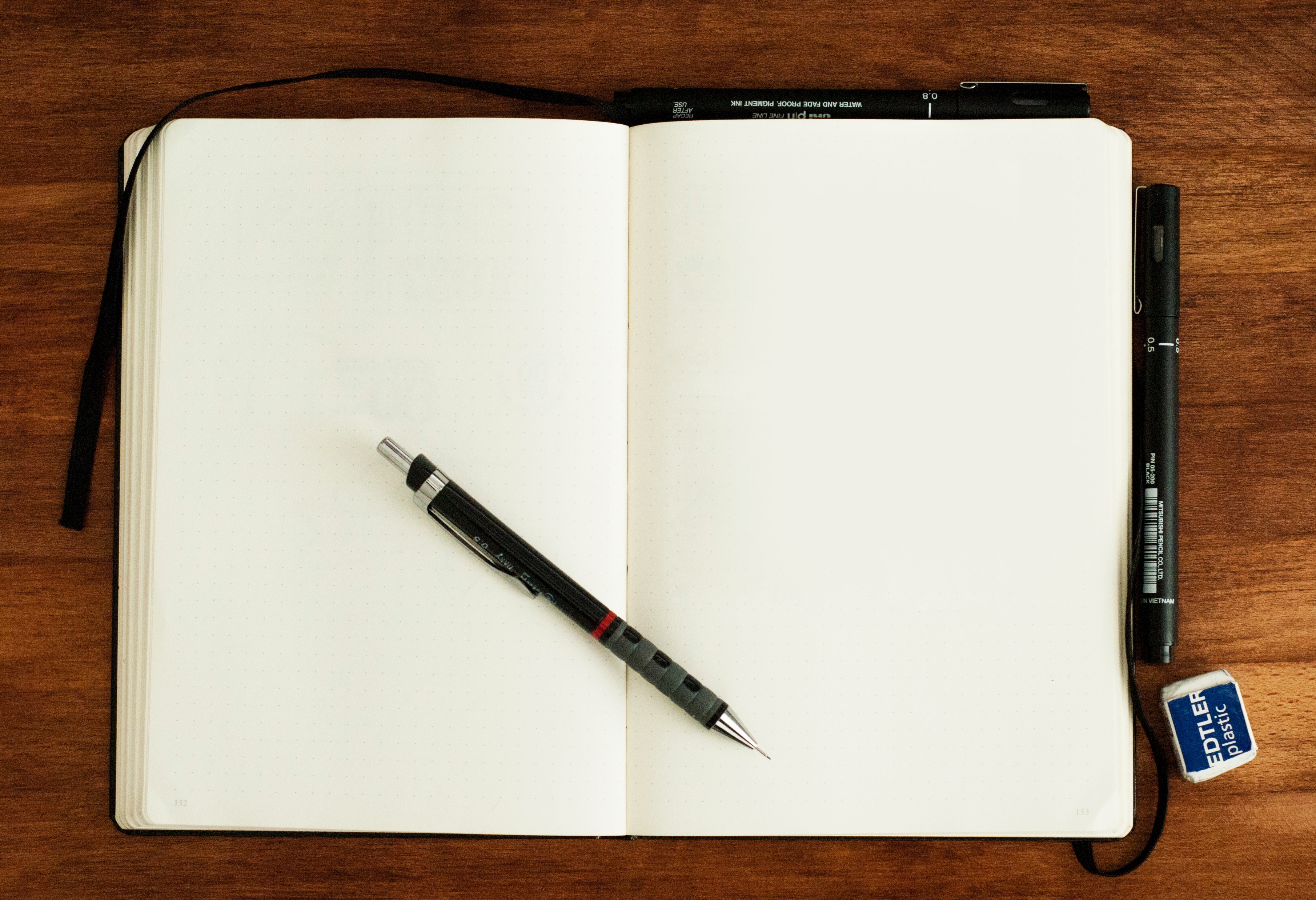
Don’t constrain yourself to the inconvenience of a laptop, inspiration often comes at the most random times. How strange would you look pulling out your laptop on a date or while chaperoning a school field trip at the zoo? My guess is pretty crazy. As a writer, a notebook will quickly become your imagination’s platform where you can scribble a few words, thoughts, sketches etc. into them. And guess what? They don’t require an electrical outlet. You can literally write from anywhere. Everywhere… except near fire.
3. Voice recorder

For whatever reason, physically jotting down things has become impossible but you need to remember something- voice record. Voice recording can save everything you or someone else has said word-for-word. You don’t have to tear your room apart looking for a pen, just record and play it later. Several voice recording apps such as: Dragon dictation or google docs voice can also convert spoken word into text, requiring few materials and making it easy for ideas to be stored much faster.
4. Dictionary

A dictionary is most useful during the editing process. I often use it as a matter of choosing the best word selection to express the ideas in my head. However, it can also be used to prevent the overuse of certain words and bad translations. How many times do you have to read the word ‘irate’ to understand the concept of being angry? Or worse, becoming confused as to what the author is trying to say because a word was used in improper context. Many words have multiple meanings, don’t force your readers to figure out what definitions you chose to stick with.
5. Read

This is more of a formal suggestion. While reading isn’t always a tangible necessity, it is necessary. Writing is a skill and like every skill, one becomes better with practice. Reading will also help you understand the structure of a good story. It will help you find your own voice, generate great ideas and spark inspiration. A writer who doesn’t read is like a musician who doesn’t listen to music.
The more you read the better writer you will become.
 JReads